Ghana Transitions to IMF Policy Coordination Instrument, Pledging 1% of GDP to Agro-Processing


 Ghana Transitions to IMF Policy Coordination Instrument, Pledging 1% of GDP to Agro-Processing
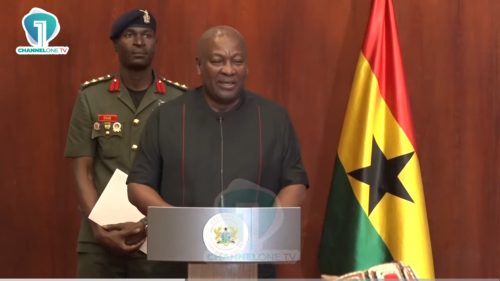
President John Dramani Mahama has announced a major strategic shift in Ghana’s economic policy, marking a transition toward long-term structural transformation with a renewed emphasis on agricultural development.
The policy pivot follows the successful conclusion of the country’s $3 billion Extended Credit Facility (ECF) program, supported by the International Monetary Fund (IMF).
Shifting to a New Economic Framework
Rather than entering another traditional funding arrangement, the government is transitioning to an IMF Policy Coordination Instrument (PCI). This non-financial framework is designed to help countries signal commitment to economic reforms and catalyze private investment.
Under the new guidelines, the administration plans to free up fiscal space to direct 1% of the national GDP toward targeted, high-yield economic sectors.
Focus on Commercial Agriculture
A primary pillar of this new investment initiative is the expansion of commercial agriculture and agro-processing, aimed at strengthening Ghana’s domestic economy and reducing reliance on imports.
President Mahama highlighted the country’s Northern Region as a central beneficiary of this strategy, pointing to its extensive arable lands as a vital asset capable of supporting large-scale, mechanized agricultural output. Government officials state that the development marks a shift toward productive, sector-specific investments that will drive sustainable growth.
Credit to Channel One