
News
NIA Revises Ghana Card Fees: Adults Now Pay GH¢30 for First-Time Registration from February 2, 2026

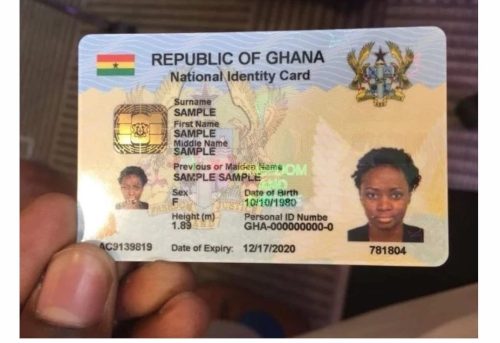 NIA Revises Ghana Card Fees: Adults Now Pay GH¢30 for First-Time Registration from February 2, 2026
Accra – January 26, 2026 – The National Identification Authority (NIA) has announced a revised pricing structure for Ghana Card services, effective February 2, 2026.
Under the new fees, adults aged 25 years and above will pay GH¢30 for initial registration. Replacement of a lost or damaged Ghana Card at NIA district offices will now cost GH¢200.
The authority explained that the adjustments follow parliamentary endorsement of amendments to the Fees and Charges (Miscellaneous Provisions) Regulations. The changes are in line with government efforts to periodically review public service fees.
This marks the first revision of Ghana Card charges since 2023. The NIA cited rising operational expenses—including software licensing, cybersecurity systems, and transportation—as the main reasons for the review, which it said was unavoidable under the Fees and Charges (Miscellaneous Provisions) Act, 2022 (Act 1080).
The authority stated that the updated pricing better reflects the actual cost of delivering identity management services and helps ensure the long-term sustainability of the national identification programme.
Selected charges under the new structure include:
• Ghana Card Replacement: GH¢200
• Card Renewal: GH¢150
• First-Time Registration (25 years and above): GH¢30
• First-Time Registration (below 25 years): Free
• Card Transfer Services: GH¢75
For non-Ghanaians, fees remain pegged to the US dollar. Initial registration costs the cedi equivalent of $120, while yearly renewal is set at the cedi equivalent of $78.
The NIA reaffirmed that free registration continues for children and other exempt groups in line with existing government policy.
The authority urged the public to familiarise themselves with the new charges and to transact only through authorised payment channels at official registration centres. It warned against using unauthorised intermediaries.
The Ghana Card remains a vital official document required for accessing public services, opening bank accounts, registering SIM cards, and participating in various state programmes. Since its introduction, it has played a central role in Ghana’s digital transformation and public sector modernisation efforts.
The NIA also announced intensified measures to clamp down on unauthorised registration practices and strengthen safeguards around the national identity database.
Source: ClassFm

BoG Chief Urges Caution as Ghana Faces ‘Critical Test’ in 2026

NIA Revises Ghana Card Fees: Adults Now Pay GH¢30 for First-Time Registration from February 2, 2026

COMMISSION OF OKYEREKROM CHPS COMPOUNDS IN THE ATWIMA MPONUA DISTRICT

Don Little’s Real name, Biography, Age and his Tribe.

Nsuta Kwamang Beposo MP Donates GH¢30,000 To Support KATH Renovation Project

80years of good in Academics and Excellence, Effisco
-
 Entertainment2 years ago
Don Little’s Real name, Biography, Age and his Tribe.
-
 News2 years ago
Nsuta Kwamang Beposo MP Donates GH¢30,000 To Support KATH Renovation Project
-
 News2 years ago
80years of good in Academics and Excellence, Effisco
-

 News1 year ago
The “Know Your Country” Tourism Campaign
-

 News2 years ago
5 Star World Class Asanco Obibini Tekyi Hotel Commission.
-

 News1 year ago
Church Leader Urges Peaceful Elections, and Responsible Citizenship
-

 Uncategorized2 years ago
JOB ANNOUNCEMENT AT UNIVERSITY OF MEDIA, ARTS AND COMMUNICATION (UNIMAC)
-

 Politics2 years ago
A/R: Nsuta Kwamang Beposo MP Commissioned Public Toilet, Boreholes For Nsuta community.